
The drones are coming.
+ BeatBox acquired, legit weed brownies, and more...
Hello hello!
January is almost here (HOW?!)—which means “new year, new me” season is about to hit full force. For health and wellness brands, this is prime time. But the brands that win Q1 aren’t scrambling in January; they’re locking in their creator programs now.
Endlss removes the manual chaos and gives your team an OS that turns small teams into high-output ambassador revenue engines
Find the right ambassadors fast with AI search across 250M creators and instant lookalikes.
Activate automatically through AI outreach, invites, gifting, SmartLinks, and commissions.
Migrate Shopify codes instantly with zero disruption to your influencers or active deals.
Run cleaner programs with targeted broadcasts, auto restocks, and workflows that keep UGC coming.
See the true numbers with real time CAC, revenue, commissions, and gifting ROI in one place.
Keep creators moving with automated weekly payouts and full earnings visibility.
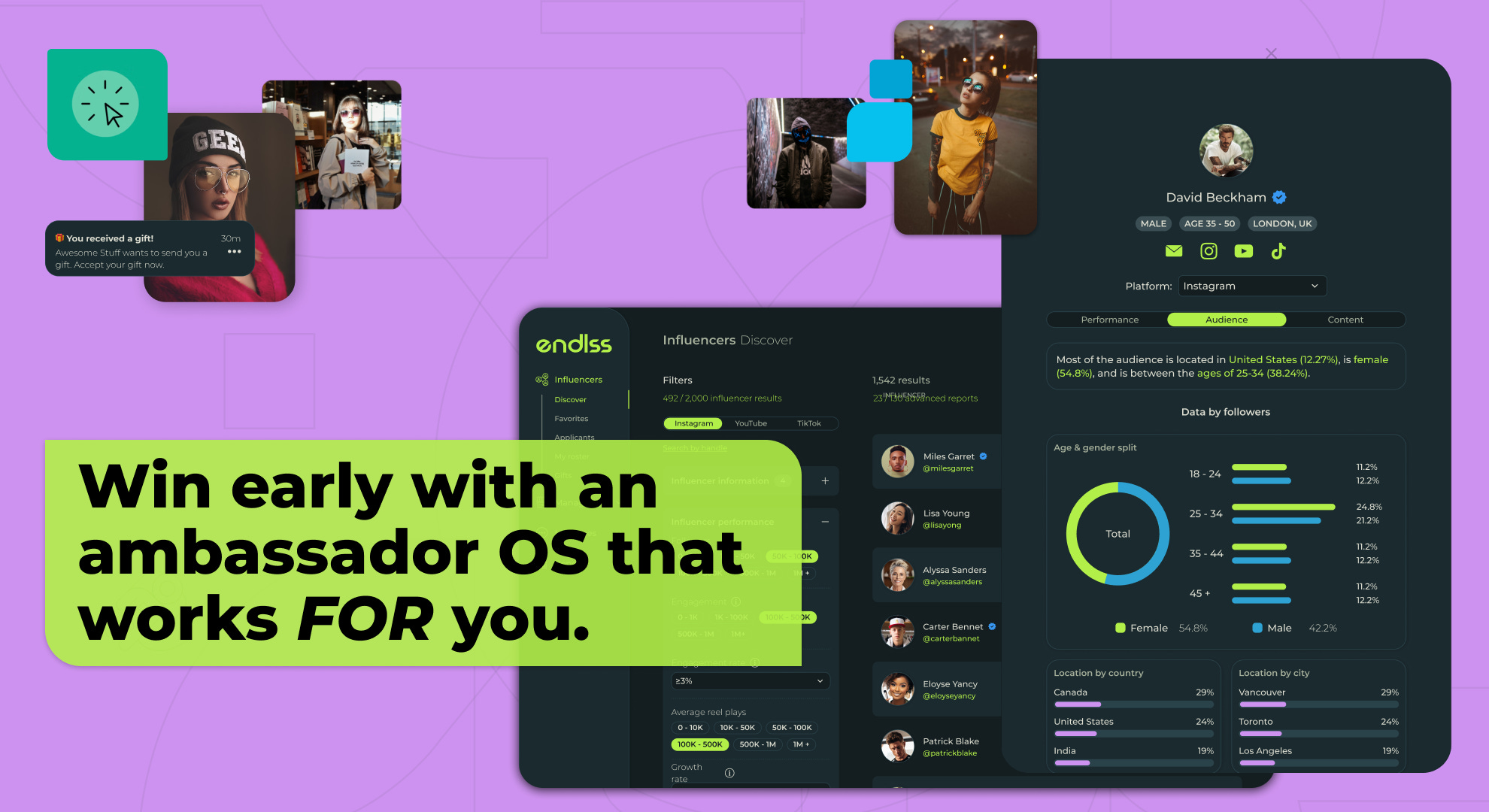
Start free with up to 50 ambassadors, or migrate your program and get 4 months for the price of 1 on any paid tier.
News From the Week
Consumers can get their products faster than ever. Same day. Next morning. Sometimes within 30 minutes. And in a few markets…quite literally dropped from the sky!
This week brought a flurry of fast-delivery announcements that reveal something fascinating about who we’ve become as consumers in 2025: We’ve reached peak impatience, and brands are scrambling to keep up.
Walmart’s drones are taking over. The retail giant just launched drone delivery across Atlanta—part of a massive expansion hitting 100+ stores in five new metros by 2026.
Launched in 2021 with over 150,000 successful deliveries, Walmart’s drone program now spans five states through a partnership with Wing, expanding to Atlanta, Charlotte, Houston, Orlando, and Tampa with service from 100 stores delivering items in 30 minutes or less within a 6-mile range.
Amazon is testing out 30-minute delivery in parts of Seattle and Philadelphia. They’re using specialized micro-fulfillment centers placed near dense residential areas, with Amazon Flex drivers ready to dispatch 24/7 .
Beyond this, they’ve also recently expanded Same-Day and Next-Day delivery to over 4,000 smaller cities and rural communities, added fresh groceries to Same-Day Delivery in over 1,000 cities, and deployed drone deliveries in under 60 minutes.
Target is scrambling to catch up. After three consecutive quarters of declining sales, Target’s piloting overnight delivery in multiple cities with sortation centers and gig workers.
In Chicago, they stopped using their 18 busiest stores to pack and ship online orders—instead routing those orders to less-crowded locations and dedicated fulfillment centers. Now, deliveries are nearly a full day faster, they’re offering next-day on 5x more orders, and it became one of their cheapest shipping markets.
In Cleveland, they opened a dedicated 40,000-sq-ft sortation center for overnight shipping. In San Diego, they’re using gig workers for last-mile delivery.
… and Uber Eats isn’t just for food anymore. The food delivery app just partnered with PacSun, Camping World, and Lush for on-demand retail delivery. In other words, you can now get a bath bomb from Lush or camping gear delivered in the same app where you order tacos. Since the start of 2025, Uber has added 1,000+ new retailers and over 50,000 retail locations across the US—including Best Buy, Sephora, and DSW.
These represent two very different strategies for winning the delivery wars:
Own the infrastructure (Walmart/Amazon/Target): These retailers are building their own delivery networks—drones, micro-fulfillment centers, sortation hubs, dedicated drivers. It’s expensive as hell upfront (Amazon’s investing $4 billion+ to expand its network), but long-term? They control the entire experience, keep all the margin, and own the customer relationship.
Rent the infrastructure (retailers partnering with Uber Eats/DoorDash): Retailers are essentially paying Uber Eats to handle delivery. The upside? Instant access to Uber’s existing driver network and millions of customers who already have the app. The downside? They’re paying commission on every order, losing customer data (Uber owns it), and becoming just another merchant in someone else’s marketplace.
They’re all essentially doing the same thing: shrinking the distance between product and customer, whether that’s physically (smaller, local fulfillment centers) or literally (flying over traffic).
The economics are brutal though. Drone delivery is expensive to scale, gig workers add operational complexity, and micro-fulfillment centers require massive capital investment. But the alternative—losing customers to whoever delivers fastest—is apparently more expensive: Target’s Q3 sales fell 2.7% while Amazon delivered 9 billion items same/next-day. The correlation is pretty clear.
So, why is this all happening? For starters, Amazon set the bar—when it launched 2 day delivery, retailers either had to fall in line or fall over. And since, then, the need for speed has only increased.
According to recent data from Capital One, 58% have paid extra for faster delivery at least once, and 55% have been willing to pay at least $5 for same-day delivery.
We’ll also punish slowness. 43% of consumers have abandoned a cart or retailer entirely due to slow shipping.
And when shopping with urgency, consumers spend more. Ultra-fast basket sizes end up around 13% larger than regularly scheduled orders according to Walmart’s Head of eCommerce, David Guggina.
The mindset shift is subtle but profound: We’re no longer planning our needs—we’re reacting to them in real-time. Retailers that can’t deliver into that reactive mindset are getting left behind. In 2025, being unable to deliver fast doesn’t just cost you one sale. It costs you the customer.
We’ve collectively decided that our time is worth more than the premium we pay for speed. Whether that’s a good thing or a concerning reflection of our collective inability to delay gratification is... well, that’s a different newsletter. 🫠
CPG & Consumer Goods


The gummification of everything continues! Grüns, known for their greens gummies, launched Juced Pre-Workout Gummies— a preworkout gummy geared towards a female consumer—featuring 2g of L-carnitine (a naturally occurring compound that plays a role in energy production), 6g of fiber, and 95mg of natural caffeine.
Meanwhile, Lemme expands its lineup with Lemme Burn “Body Composition Gummies,” the gummy version of its Lemme Burn Metabolism & AMPK Activating capsules. According to the press release, this product “delivers a delicious way to support visceral fat reduction”
Something about pairing “delicious” with “visceral fat reduction” just doesn’t sit right with me. It feels like we’re right back in “skinny tea” era… - Jenna
According to DataM Intelligence, the Gummy Supplements Market Size was valued at USD 24.34 billion in 2023 and is projected to reach USD 66.79 billion by 2031, expanding at an impressive CAGR of 13.6% from 2024 to 2031. TL;DR: People want everything in gummy form.
The next wave of protein. Bloom is launching Clear Protein exclusively at Target in January 2025, featuring fruity flavors (Strawberry Watermelon and Raspberry Lemon). Each serving contains whey isolate plus 5g collagen peptides, 20g of protein, and digestive enzymes, at only 82 calories.
Clear protein—a form of whey protein that’s been further processed to remove most fat and carbs—is quickly becoming the next protein frontier. It took a minute to develop actually good-tasting clear protein products, but brands like Clean Simple Eats, Seeq, Genius Gourmet, Pretty Tasty, and Protein2o have proven clear protein’s potential and paved the way for brands like Bloom to enter the category.
Legitimizing the ~underground~ brownie biz. Cool new brand alert!!! Clebby’s launched hemp-derived cannabis baking mixes featuring delta-9, hemp-derived THC (hemp-derived = legal under the 2018 Farm Bill). The mixes simplify cannabis cooking with lab-tested delta-9 oil for cookies, brownies, cakes, and more for “perfectly dosed” baked goods. Each mix comes with either 100mg or 200mg THC oils, so you know exactly how much is in each serving.
This space is growing incredibly fast. Retailers like Total Wine are dedicating more and more shelf space to these products. Even massive retailers like Target are now jumping in, testing the sale of nearly a dozen THC-infused beverage brands across 10 locations in Minnesota. This mainstream retail acceptance signals that hemp-derived cannabis products are here to stay and are quickly becoming a significant category in their own right.
And we’re cautiously optimistic. Congress recently snuck in a provision that could really hamper its growth: buried in November’s government funding package, a section rewrites the federal definition of hemp—capping THC at just 0.4mg per container (a single gummy typically has 2.5-10mg), banning lab-created cannabinoids like delta-8 outright, and closing the THCA loophole (THC’s non-psychoactive precursor that converts to intoxicating THC when heated). As of now, this is taking effect November 2026—effectively outlawing most hemp products that exploded post-2018 Farm Bill.
If this makes you mad (fair) SUPPORT small THC brands like Clebby’s!!!!!
San Francisco against Big CPG. San Francisco’s city attorney filed a groundbreaking lawsuit against major processed food companies including Kraft Heinz, PepsiCo, Coca-Cola, and others, alleging they engineered a public health crisis through ultra-processed foods. The suit seeks restitution, civil penalties, and an end to what they deem deceptive marketing practices.
Eos enters the fragrance game. Eos launched its first permanent collection of fragrance mists, featuring eight core scents. Experts are projecting this new line alone will generate $30 million in its first year for Eos.
This is not surprising in the slightest. Fragrance is the fastest growing category within beauty right now with mass market fragrances growing 17% year-over-year through Q3 2025. Younger consumers—particularly Gen Z and Gen Alpha—are driving this boom with Gen Z’s fragrance usage surging 5 percentage points to 83%. They view fragrance as a key part of their self-expression toolkit and fueling demand for affordable, accessible scent options. We recently dove into this topic in our newsletter from a few weeks ago.


You might remember EOS from it’s ICONIC (at least when we were in middle school) spherical lip balm.
eCommerce
Tying the bow on BFCM. Last week, we shared some early stats on Black Friday and Cyber Monday. Now, the final tally is in: U.S. consumers spent $44.2 billion online during Thanksgiving weekend (up 7.7% YoY), with Cyber Monday hitting a record $14.25 billion (up 7.1%) and Black Friday reaching $11.8 billion (up 9.1%). Here’s how they were shopping:
Buy Now Pay Later hit new heights. Buy now, pay later services processed over $1 billion on Cyber Monday alone (up 4.2% YoY), accounting for 7.2% of total online sales that day. Black Friday added another $747.5 million in BNPL transactions, with Millennials (51%) leading adoption.
Live shopping surges. TikTok Shop drove over $500 million in U.S. sales during the four-day BFCM period, with nearly 50% more shoppers YoY, while livestream marketplace Whatnot tripled last year’s totals, reporting $75 million+ in single-day live sales.
Looks like Quince is taking this wine thing seriously. Last week, we reported that Quince is launched a three-product “Gourmet Food & Wine” category. This week, we learned that the e-tailer is making the whole alcohol thing happen in partnership with DRINKS Anywhere, a plug-and-play system that lets retailers offer alcohol.
Funding
Boozy juice boxes. Anheuser-Busch is acquiring 85% of BeatBox, a top 10 RTD brand, for around $490 million (valued at $575M), adding it to AB InBev’s Beyond Beer portfolio alongside Cutwater Spirits, NÜTRL Vodka, and Phorm Energy. It’s a play for younger drinkers at a moment when traditional beer demand is softening, opting for fruity, high-ABV, non-carbonated RTDs and canned cocktails.
But the deal signals something bigger than just portfolio diversification. As Dan Graham co-founder of Springdale Ventures, an early investor in BeatBox told us:
“BeatBox succeeded because they fundamentally reimagined the drinking vessel. While everyone else iterated on can sizes, they went Tetra Pak—creating a format that’s portable, shareable, and signals ‘party’ in a way cans never could…We’re watching traditional silos—beer, wine, spirits—collapse into occasion-based consumption. BeatBox sits at that intersection: wine-based but consumed like a premixed cocktail. With RTD volumes projected to double globally by 2029, the $490 million valuation—roughly 2.2x revenue—reflects strategic premium pricing for brands that authentically capture Gen Z and create new drinking rituals.”
Functional beverage brand Hiyo entered into a multi-year partnership with Live Nation, bringing their organic social tonics to U.S. venues and festivals. Live Nation also invested equity in Hiyo.
Hiyo has been crushing it lately, they’re selling over half a million cases annually across 3,000+ US retail locations including Target, Whole Foods, and Sprouts. The brand has also secured some serious investment momentum raising over $20 million in funding plus Constellation Brands took a minority stake in the business in March 2025 with their SVP calling Hiyo “one of the fastest-growing names in the functional non-alcoholic space.”
But why have consumers gravitated to this brand, making it the largest contributor to the non-alcoholic category’s growth in the last year? It’s approachable. Many non-alcoholic brands simply don’t resonate with most consumers—they’re either too expensive, overly branded, too complicated, or they simply don’t taste good. Taste is key!
This partnership mirrors how Liquid Death scaled to billion-dollar brand. In 2021, Live Nation made Liquid Death the exclusive water across 120+ owned and operated venues and festivals in the U.S.—and took a $15M equity stake in the company. That deal put tallboy cans in front of Live Nation’s ~100 million annual concertgoers, building massive brand awareness in high-energy social settings where word-of-mouth spreads fast.
We love it when a retailer has stake in the game. REI invested in Dune Suncare through its Path Ahead Ventures fund. The sunscreen brand has doubled sales this year and expects 5-7X growth in 2026, expanding retail partnerships and launching new products in the growing $14.35 billion sun-care market.
Path Ahead Ventures is REI’s (relatively new) $30 million fund backing early-stage companies led by people of color and women in the outdoor, fitness, health and wellness or sustainability markets.
Dune is my sunscreen brand of choice! I use the Mug Guard on my face every day. - Nate
Plant-based milk is still kicking! Ripple Foods, a leader in high-protein and allergen-free plant-based milks (made with peas!), raised $17 million to expand its product line. The round included new investments from Material Impact and Rich Products Ventures, and several returning partners.
While other plant-based alternatives are struggling, Ripple is proving that there’s still room for plant-based milk. It boasts better nutritionals than real milk—less sugar, higher protein, more calcium—and is free of the top 9 allergens, making this a great product for kids.
But let’s not forget about OG dairy. Because Horizon Family Brands acquired Maple Hill Creamery. Maple Hill will join Horizon Organic and Wallaby organics. This move not only bolsters their market presence but also supports sustainable farming practices nationwide.
Trubar goes private. Canadian vegan protein bar maker Trubar is set to be acquired by Turkey’s Eti Gıda for $143M, aiming to boost its North American growth and international reach after hitting $50M in revenue last year.
Breaking Bad stars cash in. Dos Hombres mezcal, founded by Breaking Bad stars Aaron Paul and Bryan Cranston, raised $15 million to fuel international expansion and brand awareness. The round includes participation from Mexican partners Fernando Romero-Luna (who runs operations for Dos Hombres) and master mezcalero Gregorio Velasco. Constellation Brands, which acquired a minority stake in 2021, continues to support.
America’s love for agave-based spirits has been growing in the past few years, with tequila/mezcal seeing a 300% increase in volumes since 2003. In 2023, tequila and mezcal sales outpaced American whiskey for the first time. And in 2024 tequila and mezcal spirit sales were up 3% from the previous year at $6.7 billion.
Check out our recent episode of The Curious Consumer, with new episodes every Wednesday.
The private-label takeover
We’re coming in hot off of Black Friday/Cyber Monday! In this episode, we’re sharing some results from this sale weekend, thoughts on Quince’s foray into food + wine, Aldi’s massive US expansion (and what that says about consumer behavior), and more.
If you haven’t yet, please subscribe, like, leave a comment, and share it! It helps us continue to bring you the most interesting news + nuance in consumer and retail every week.


