

The new Jimmy Dean ☀️
+ Body care is all the rage, Daily Harvest's return, and more...


Happy 2026!!!
We hope you had a restful, snack-filled holiday season and, more importantly, that you aren’t feeling too targeted by copious “new year, new you” ads this January.
We’re so excited to kick off this year with some exciting news:
We just hit 25,000 followers on Instagram! It feels like just yesterday, we were sharing that we reached 20k. Insanely grateful for all of your support on our posts, and as always, please let us know if you have any thoughts on how we can make better content for you.
We’re heading to the very first Winter FancyFaire Show in San Diego this weekend! If you’re going to be there, definitely hit us up (hello@expresscheckout.com) :) We’ll be walking the show floor, filming content, snacking with alarming gluttony, and meeting some old + new friends.
Aaaaand in case you missed it: We’re going to be upping our paid content in 2026: It’s only $65/year or $6/month—less than an NYC latte—and can very likely be expensed (here’s a template of the email you can send your manager to request that, inspired by Rachel Karten ). As we ramp up our content output, we’ll adjust pricing, so….
Regardless of if you’re a paid or free subscriber, we want to hear from you: what you want more of, less of, and what we haven’t thought of yet. Take our 2-minute audience survey here.
—Nate & Jenna
News From the Week
This week, DropOut Companies launched Bronco, its new frozen breakfast sandwich, nationwide exclusively at Target. The bagel sandwich comes loaded with either 15g or 21g of protein, no seed oils, and pure frozen convenience—all for $7.39 for a two-pack, or roughly triple the price of a Jimmy Dean equivalent.
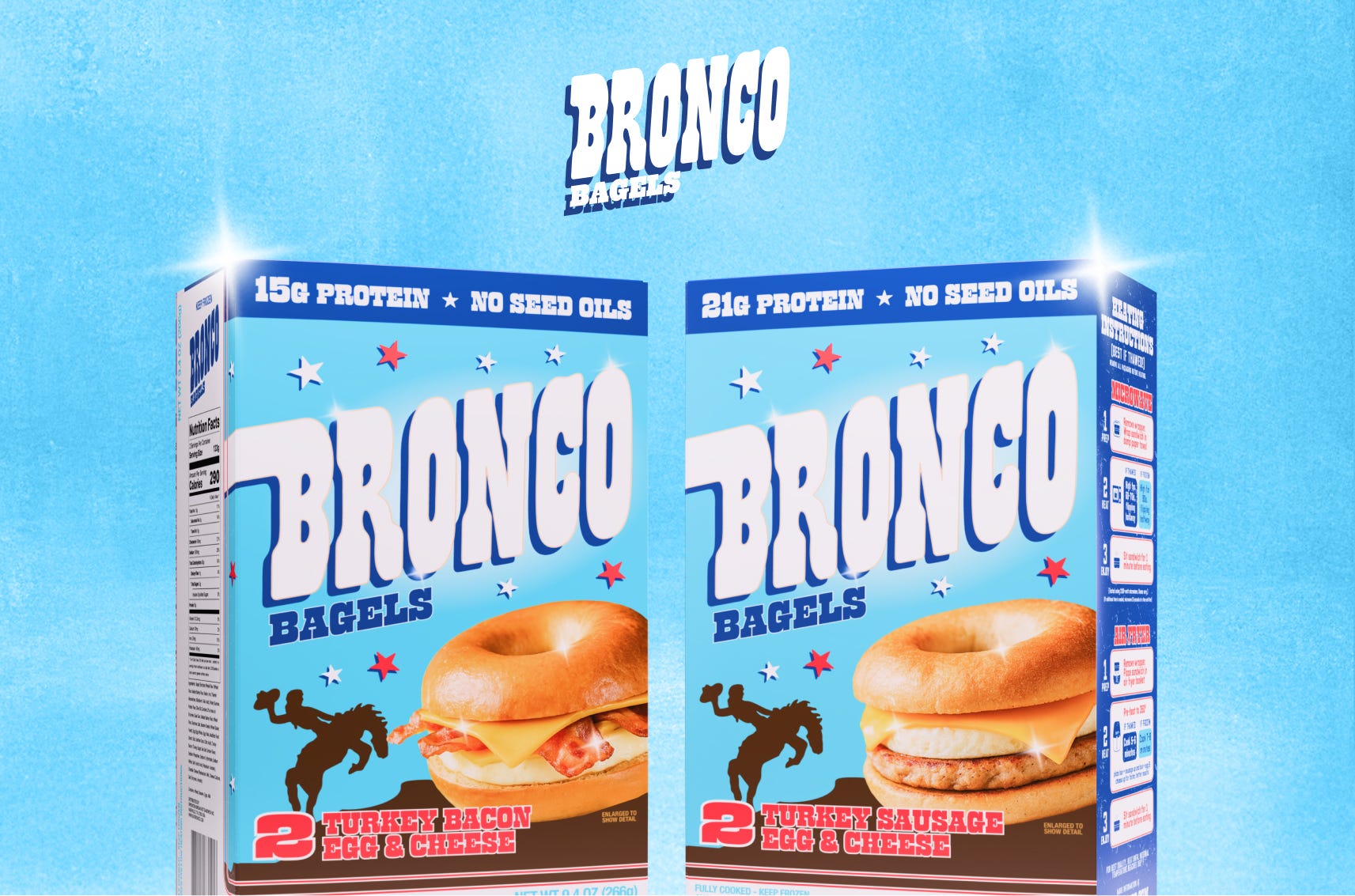
This is DropOut’s second brand launch after JAMS, its Uncrustables-style PB&J made with “cleaner” ingredients, 10g of protein, and no seed oils. The company’s playbook is clear: take nostalgic convenience foods, seriously upgrade the ingredients (and add a boost of protein), and bet that consumers will pay a premium.
Premiumization (and proteinification) are by no means new concepts in CPG—we’ve seen it across virtually every category. But what is interesting here is that frozen was the value category: the aisle for college students, budget-conscious families, and people who needed dinner on the table for under $5. Frozen food’s entire identity was built on value brands.
Just take this data from a recent survey: 39% of consumers buy frozen food because it lasts longer, while 63% stock up during sales or uncertainty—and Gen Z views frozen food stockpiling as an “inflation-proof hack.” These are value motivations, not premium ones.
Trying to premiumize frozen food isn’t your standard “[X] but better” product upgrade—it’s asking consumers to completely reframe their relationship with a category they’ve been trained to see as “lesser than” for decades.
But over the past few years, there have been a slew of new entrants that are successfully changing the way consumers view the freezer aisle:
Walk through any major grocery store today, and you’ll find items like frozen pizza from the world’s #1-ranked pizzeria, NYC’s most famous banana pudding (meticulously made to match its IRL experience), and scratch-made restaurant-quality biscuits and breakfast burritos from Mason Dixie—all costing 2-3x what their mass-market competitors charge.
In 2025, private-label brands even got in on the premium trend: Target’s Good & Gather launched a collaboration with James Beard Chef, Ann Kim, on premium pizzas and appetizers. And customers responded, with private-label frozen brands seeing a 3.8% sales increase in the first half of 2025.
Even ecommerce brands like Wildgrain—now a $30M+ business shipping artisanal sourdough nationwide—are proving shoppers will cough it up for fancy frozen food.
A few months ago, we spoke with Ayeshah Abuelhiga, Founder and CEO of Mason Dixie Foods. She pointed out how the current frozen aisle layout reinforces outdated consumer habits: “Consumers only buy what’s in front of them. If you’re giving them cheap choices, they’ll continue to buy the cheap choices.” She believes retailers need to break this cycle by featuring better-for-you products more prominently and reducing their dependence on low-margin, high-volume brands.
Especially in a category where expiration date isn’t really factoring into repurchase rate, relying on volume over margins just… doesn’t feel wholly justified.
The reality is, DropOut likely isn’t betting on the Jimmy Dean consumer upgrading. It’s betting on a premium shopper who’s being given a reason to re-enter the frozen section. The question is whether that audience is big enough to justify the flood of premium brands entering the category.
With $91.3 billion flowing through the U.S. frozen food market annually, brands like DropOut are betting the answer is a resounding yes.
CPG & Consumer Goods
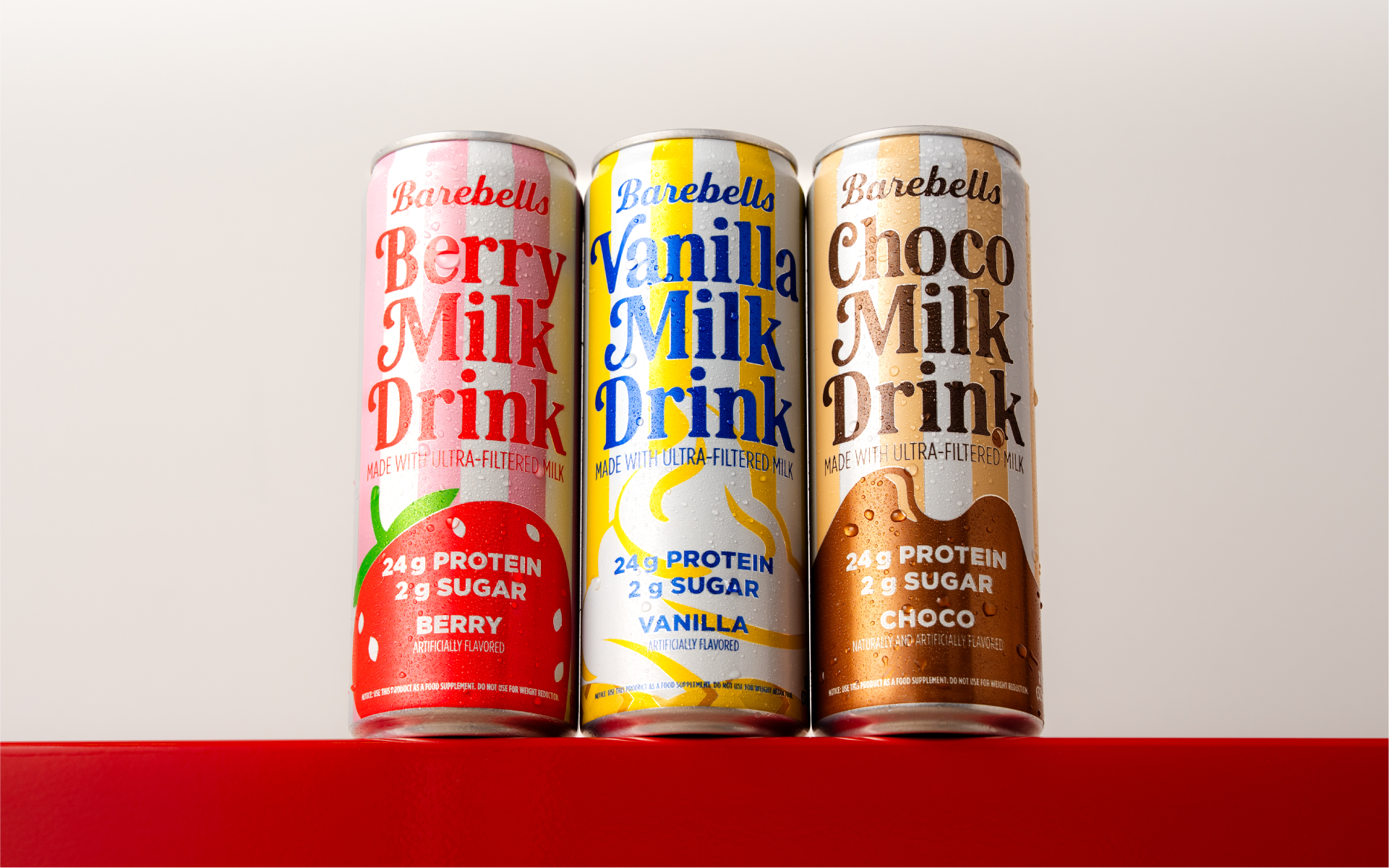
There’s a new milk in town. Barebells is challenging brands like Slate and Nurri with its new canned Milk Drink—an ultra-filtered milk with 24g of protein and 2g of sugar in Berry, Choco, and Vanilla flavors.
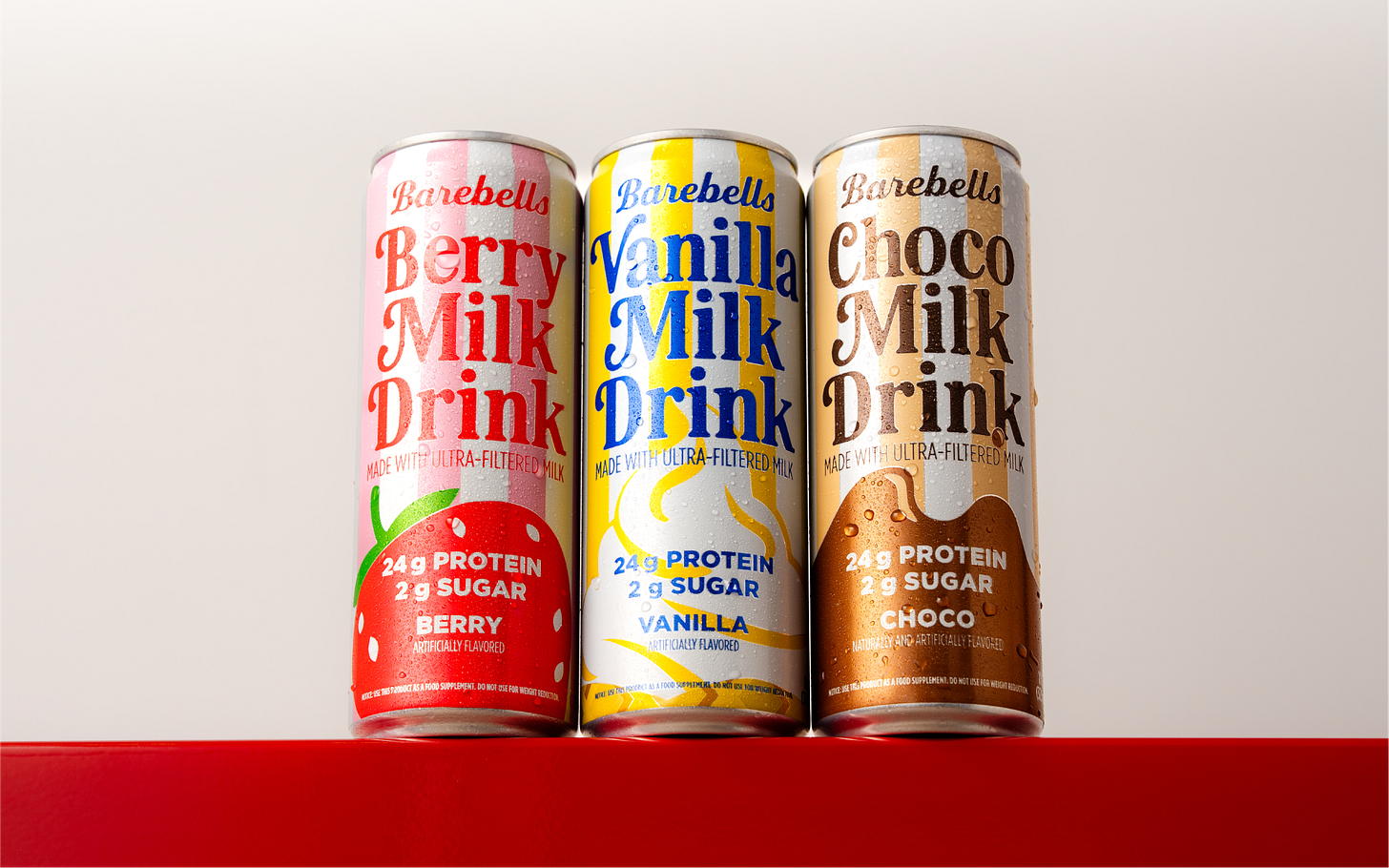
After dominating the US protein bar market, Barebells is expanding aggressively into beverages. The brand launched protein sodas in October, and now it’s taking on the “milk drink” category. With the bar space getting crowded and Built breathing down its neck, this portfolio expansion makes strategic sense.
At the same time, it’s getting harder and harder for ready-to-drink protein brands to stand out in an ever-growing aisle. As Food Business News explained, just a year ago, Fairlife’s drinks were the only ultra-filtered protein milks sold at Costco—now, high-protein ready-to-drinks are taking over in ambient. With the same standard flavors and macros as brands like Nurri, it’ll be interesting to see how Barebells will attempt to stand out with its new product line.
The plant-based struggle continues. Konscious Foods, the Canadian plant-based seafood startup (which made frozen plant-based sushi, onigri snacks, and poke bowls for retail), ceased operations due to trade issues and funding struggles. This closure marks yet another sign of the broader struggles facing the plant-based food market.
But some funding news of the week told a different story: BlueNalu, a startup cultivating bluefin tuna toro for premium sushi and fine dining, just raised $11M—bringing its total funding to $129M. It’s certainly an exception in an otherwise struggling market: cultivated meat startups only received $36M in the first nine months of 2025.
This isn’t a story of plant-based products “failing,” IMO. It’s a story of finding the right distribution for these products—one where there’s a lower barrier of consumer education. Konscious had delicious products, but consumers aren’t used to buying sushi products in the frozen section, let alone trying a premium-priced, plant-based version of these products. Once a company like BlueNalu (hopefully) popularizes plant-based sushi products at restaurants, I think Konscious could’ve had a better shot at success. - J


It’s body care season:
Tower 28, the viral skincare and makeup brand, is expanding into body care with its new SOS Rescue + Relief Body Wash, specifically crafted for eczema as a gentler alternative to the (scary) recommended bleach bath (and yes, it’s real).
Bobbi Brown’s Jones Road Beauty, is launching The Body Collection on January 7, featuring body lotion, oil, scrub cream, and shower gel.
The ‘skinification’ of personal care and beauty has been booming over the past few years, with skincare-inspired ingredients and claims that go far beyond the face. The idea is that these are products you’d be using anyway—just upgraded versions that actually improve your skin while you use them.
Hair accessories to haircare. Kitsch, a popular hair accessories and care brand, is expanding into liquid shampoos and conditioners. The line is launching at Target and Ulta and on Amazon. This line is extensive, featuring 12 formulas across six different scents.
Kitsch is a wildly impressive, self-funded, and female-owned global beauty brand that grew from founder Cassandra Thurswell selling hair ties door-to-door to a business that sources estimate is nearly a $400 million brand. They’re current sold in over 20,000 retail locations across 27 countries.
Trader Joe’s (finally) joins the prebiotic soda party. The cult-favorite retailer just launched Cherry Cola and Strawberry Vanilla prebiotic sodas at $1.99 per can. Made with agave inulin, apple cider vinegar, cane sugar, stevia, and fruit juice, these are lower sugar and contain 5g—looking a whole lot like our friend Olipop 👀.


eCommerce
Speaking of frozen… Daily Harvest is back. After its Chobani acquisition in 2025, Daily Harvest is relaunching its online shop this month. This time, it’s featuring a new lineup of protein-packed oat bowls and smoothies. But this go around, they’re not requiring a subscription to order.
Daily Harvest has had an interesting few years. The brand took a turn for the worse in 2022 when their French Lentil + Leek Crumbles recall sent 130+ customers to the hospital due to tara flour contamination, hurting their brand reputation. They started to pick themselves up again in 2023 when they made their first move into retail at stores like Target, Kroger, and Wegmans. Eventually they were acquired by Daily Harvest in May 2025 (which we covered here).
And clearly they’ve been listening to the market. The new “Eat Food, Not Fiction” campaign, a parody of The Sound of Music’s My Favorite Things, calls out wellness-industry pseudoscience and brings Daily Harvest back to what originally made it resonate: simple, real, ingredient-led food. Pair that with protein-packed bowls, a no-subscription checkout, and fewer hoops to jump through, and this relaunch feels like a return to their roots, just updated for where food shoppers are in 2026.
Funding
Vacation Inc is cashing in on nostalgia. Vacation Inc., the beloved nostalgic suncare brand, hired Raymond James to explore a minority stake deal as it aims to capitalize on a projected $80 million in sales.
The olive oil wars continue to heat up. Cobram Estate Olives, Austrailia’s largest producer, acquired California Olive Ranch for $173.5 million, creating the largest U.S. olive oil producer. The deal more than doubles Cobram’s California groves to 3,292 hectares and significantly expands its market presence.
Apparently, the two companies first discussed a merger back in 2014. So why did it finally happen now? Because olive oil has shifted from something you make your eggs with into a fast-growing, health-driven and brand-led category. With extra-virgin olive oil riding a global wellness wave and U.S. consumers still massively under-penetrated compared to other markets, locking up high-quality domestic supply has suddenly become a strategic advantage.
And with brands like Graza pulling a new generation into olive oil, owning the groves is becoming just as important as owning the shelf space.

Check out our recent episode of The Curious Consumer! We walked through some of the biggest themes of 2025, the “winners” of the year, and predictions for 2026 in consumer brands.
A year in consumer brands + retail: 2025 in review

Welcome to our final podcast of 2025! We’re walking through some of the biggest themes and headlines from the year, from redefining “function” (with protein, THC, and caffeine) to the new target demographics for skincare + fragrance and the future of retail. Thank you for being a listener this year—we are so grateful, and can’t wait to continue providin…
If you haven’t yet, please subscribe, like, leave a comment, and share it! It helps us continue to bring you the most interesting news + nuance in consumer and retail every week.
While doing a research project a few years back, I came across a French grocer called Picard which specializes in frozen food. It looks similar to Trader Joes, but I wonder if the U.S. is ready for a store where frozen is the feature?
congrats on 25k!! i love seeing u guys grow!!
also so much protein--but gluten ): i would love to see a protein carb that also is gluten free (which is highkey a big ask lmao but royo bagels reached out to collab with me & i had to decline so sad)